A single reading falls short
Soil status should be reviewed together with the stage of the season and the strategy agreed with your agronomist.
Soil, weather and vigour data to review every decision with your agronomist.
For irrigated vineyards, AgrolabX brings together soil moisture, recommendations and satellite vigour differences. Share records and alerts to keep the context of each plot throughout the season.
€15 per connected sensor per month*
No minimum fee. Hardware quoted separately.
Proposal within 24 hours · *Taxes apply
Developed in Andalusia, Spain, for the field.
Soil status should be reviewed together with the stage of the season and the strategy agreed with your agronomist.
The map can show differences worth visiting, without the index explaining their origin on its own.
Temperature, humidity and rain events can prompt field checks and shared records.
Check moisture by depth and recommendations per plot, adapting the interpretation to the vineyard’s context.
Spot satellite vigour differences and compare them with the soil and what you see on the vines.
A station and, if added, a leaf wetness sensor provide local records to review situations of interest.
Platform example on an olive farm: the screenshots show that farm, not an installation in this crop. The figures illustrate the interface.
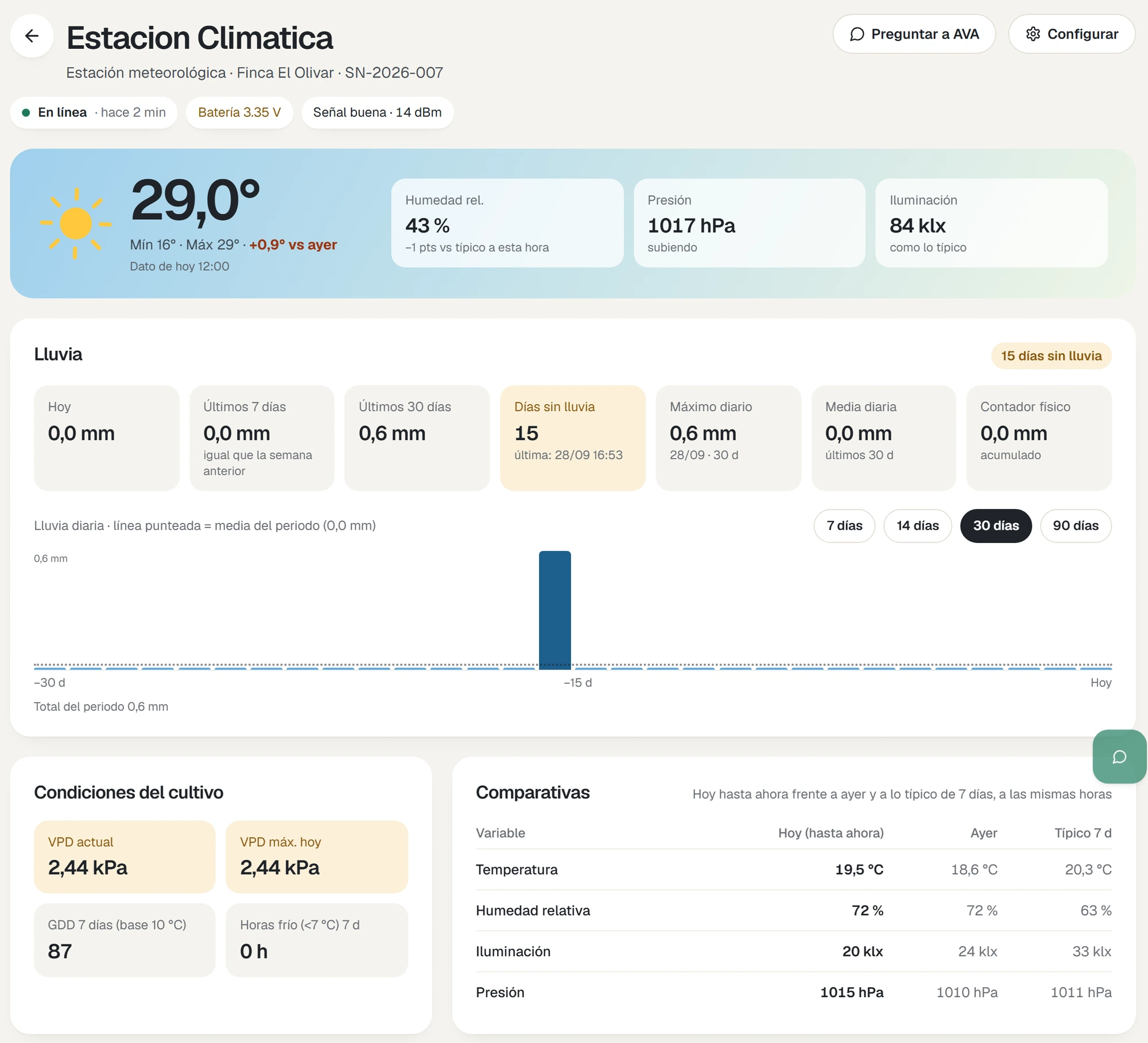
Scroll the screenshot to see the detail or open it in full.
This panel shows local measurements and history, including recorded rainfall. It is a view of the platform, not a photo of the physical device.
Enlarge screenshot ↗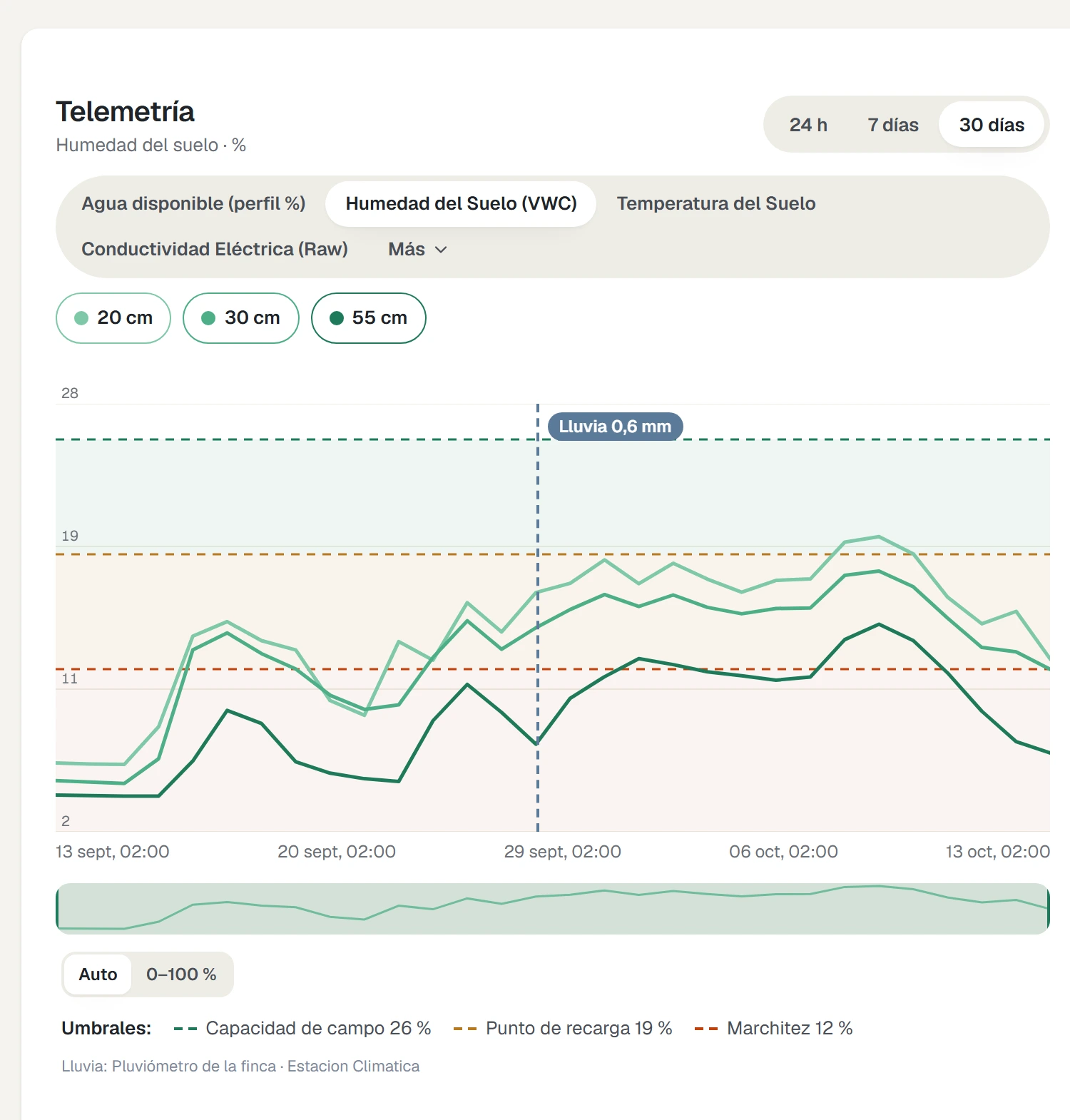
Scroll the screenshot to see the detail or open it in full.
Compare trends before and after irrigation. The thresholds and depths shown belong to this olive example, not a recipe for your farm.
Enlarge screenshot ↗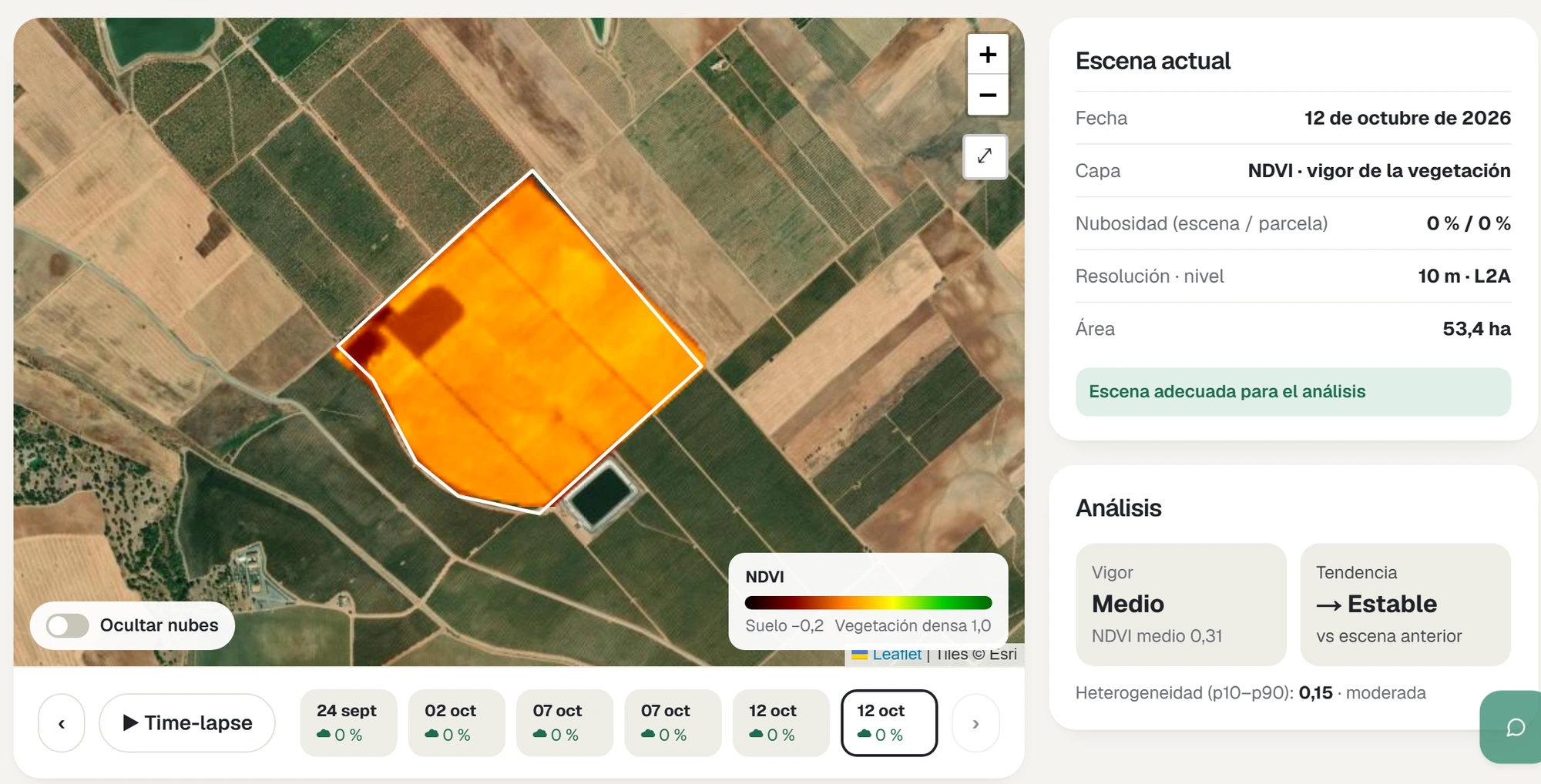
Scroll the screenshot to see the detail or open it in full.
NDVI helps locate differences and follow how they evolve. On its own it doesn’t identify the cause: interpret it together with soil, management and your agronomist’s observations.
Enlarge screenshot ↗Combine soil sensors with a station depending on what you want to follow in the vineyard. Consider adding leaf wetness if you need to observe that variable.
Temperature, air humidity and rain measured on the farm take centre stage. Alerts about conditions favourable to disease are signals to review with your agronomist.
We choose the setup based on soil, irrigation blocks, coverage and needs. There is no number or depth of sensors that works for every farm.
01Tell us about your farm and what you need to monitor.
02Get a proposal within 24 hours, with platform and hardware itemised.
03We set up the solution for your needs and support you as you use it.
No. Weather conditions can flag situations to review; they don’t diagnose infections or trigger treatments automatically. Inspection and technical judgement are still needed.
No. The corresponding sensor has to be added and a suitable measuring point chosen. The configuration is set out in the proposal.
It can help you locate vigour differences. Check their cause with soil data, management and observations; NDVI alone does not determine water status.
The platform costs €15 per month per connected sensor, with no minimum fee (taxes apply). The weather station counts as a single sensor. Hardware is quoted separately. AgrolabX supports you and helps you get the most out of the solution.
AgrolabX provides information and recommendations. You and your agronomist review the decision for your farm; the platform does not open or close valves. There are no universal amounts, depths or thresholds.
The forecast anticipates weather conditions; the station records local measurements depending on its equipment. ETo is an atmospheric reference and estimated ETc applies the crop context. None of them is a direct measurement of your plants’ water use.
Tell us your region, area and what you need to monitor. You’ll receive a proposal for vineyard within 24 hours.
€15 per connected sensor per month*, no minimum fee. Hardware separate. *Taxes apply.